I love to share about small town America, and about how many opportunities are available to those who live there, even if those opportunities aren’t immediately obvious.
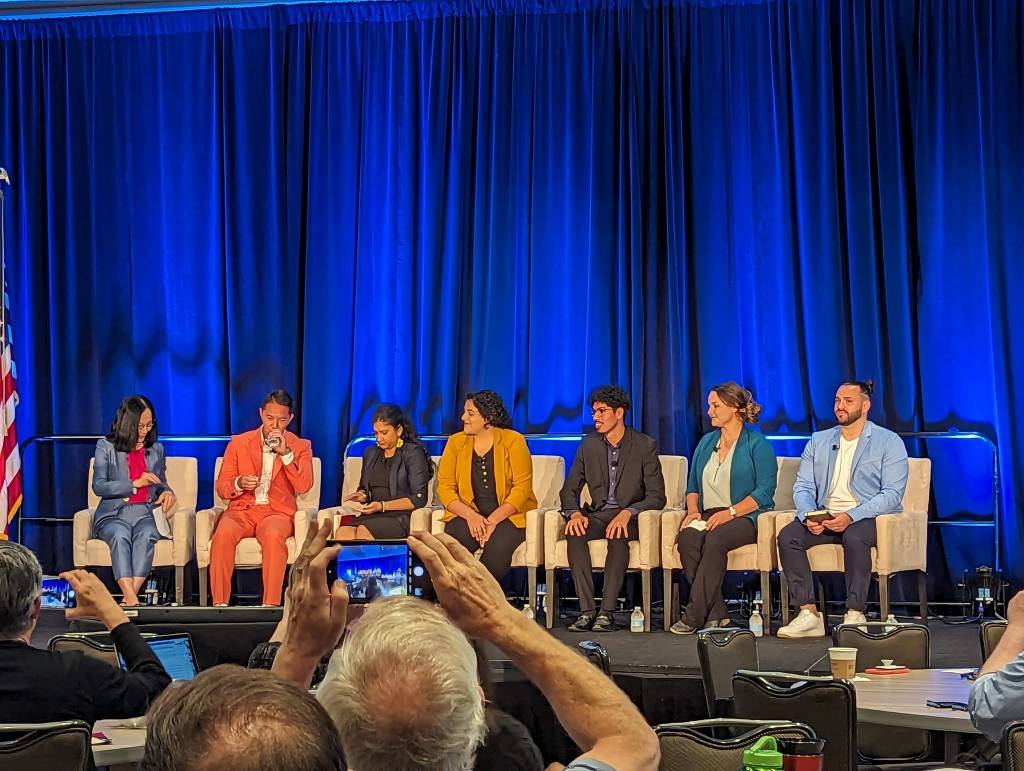
In June of 2023, I was invited to speak on the Voices From the Field Panel at the NSF Noyce Summit with 5 other Noyce Fellow teachers. We were given a list of questions me might be asked ahead of time. I wasn’t able to give my response to all of them, so I wanted to share those here.
Tell us your name, Noyce project, what you teach, where you teach, and about your school and community.
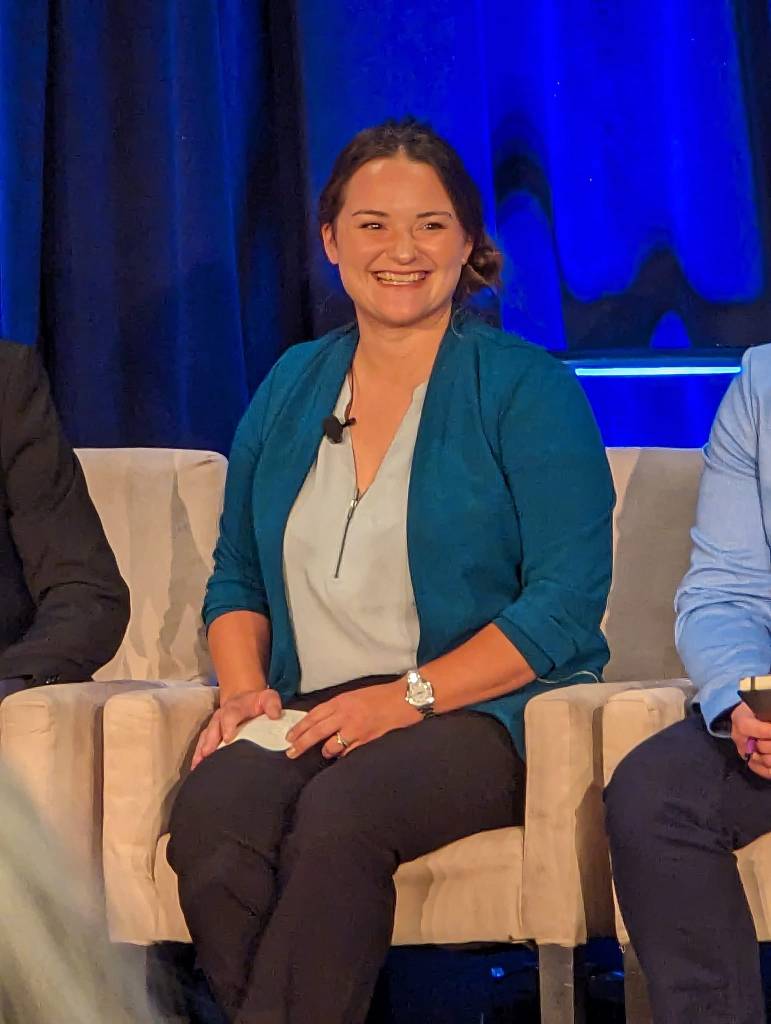
My name is Katie Flax. I attended Fort Hays State University in Hays, KS where I received a B.S. in Biology, a B.S. in Secondary Education, and an M.S. in ESOL Education. I also completed a two year Noyce Teacher Leader program there. I am currently certified to teach secondary biology, chemistry, ESOL, and mathematics.
I am going into my 7th year of teaching. The first five years of my career, I taught high school science in a town about 30 miles away. I commuted daily, also bringing my young children along with me to attend a daycare there. I taught a combination of biologies and physical sciences there. For a small district, we were lucky to have two science teachers in the building. I consider that other teacher a great mentor of mine, and I still ask him lots of questions to this day. He taught the upper level sciences to our students.
Today I live in a very geographically large district encompassing 5 small towns. It is however a very small district in population with fewer than 150 students K-12. With that said, I teach what I am called upon to teach. In the upcoming year I will teach all the junior high and high school math classes as well as reading interventions. What those classes are vary slightly from year to year based on the needs and interests of our students.
What was the most significant thing that you learned in your Noyce program?
Our program at Fort Hays focused on preparing us to teach in rural schools. Many of us came from rural schools ourselves so we were aware going in that we would potentially be the only math or science teacher in our building, therefore we would be responsible for many different classes.
The best thing that I learned though was about the importance of learning my school’s and town’s culture and building relationships within them. For example, in a town of 500 people, the Friday night high school football game is the event of the week and everyone will be there. You need to be there too. The next thing you need to figure out is, are you living in a town where everyone will talk because they saw their new science teacher in the bar after the game OR are will everyone talk because you WEREN’T in the bar celebrating after the game!
We learned that the custodian and the secretary are the two people that are really in charge of the school, and if we need anything, we need to run it by them first. We learned that building and maintaining positive relationships with veteran teachers is important, and that there is no good that can come out of working in a school where faculty and staff have negative opinions about the students there. We learned that asking questions is a good thing, and that even as an experienced teacher, you should always be willing to continue to grow and learn.
Building and maintaining relationships with my professors, my former bosses and coworkers, and community members has meant huge things for my classroom – donated supplies, field trips, activities, all things that I have been able to bring in to my students or take them to were because of the relationships I have with others.
What was the most useful piece of advice that you received when you started teaching in your own classroom?
Something I was told many times early on is that you don’t have to grade everything that each student does, yet it is difficult not to! As I have continued to teach, I have learned that is it much better to provide students near immediate feedback by allowing them to grade and work through their own assignments than it is for you as a teacher to grade them, especially if it takes you a week or longer to get them back!
I also learned that it is important to attend as many workshops and professional developments as you can. In fact, thanks to organizations designed to support STEM teachers in the field, many workshops are very low cost or might even send their participants home with classroom supplies or a stipend. While my college education prepared me how to teach the child and taught me content, professional development teaches me better ways to teach science.
Your students bring assets to your classroom. Describe one positive experience or lesson that you learned from your students.
I am continually humbled by what I don’t know about my students and their experiences, both positive and negative. I get to learn a lot about my individual students likes and dislikes and their thoughts and experiences when I teach with a modeling approach. During modeling instruction, students are given a problem or a phenomena and then they get to describe to me how they think it works. I guide them through refining their models until they get it right. It’s humbling to realize that many students don’t have relevant experiences so it is up to me to provide those for them.
Like the assets that your students bring to your classroom, your community provides assets
that support student learning and your teaching. Describe one positive experience or lesson
that you learned from the community.
People in the community are ready and willing and able to come to your classroom and talk to students, to meet them at their place of work for touring or shadowing, to support the kids at their games and activities. Last fall, I took my physical science class out to a wind farm that is about 15 miles away where they toured the operations building, then we drove out to the base of an actual tower and my students got to go inside the base. It was a very cool experience for everyone.
Describe a moment when you wondered “what have I gotten myself into?” followed by a
positive experience, which helped you realize that what you do makes a difference.
COVID was hard. I am still seeing the ramifications of COVID in my classroom. The hardest parts are the gaps that our students have, and to a certain extent, an attitude that school and effort doesn’t really matter. I see it as my place to come to the school and be a cheerleader for my students, to encourage them to believe that attendance, participation, and effort IS worth it. I think overall my students see me and they know I am working hard for them and overall they work hard for me – they know I am genuine when I say I want them to succeed at what they choose to do in life.
I also had a lightbulb moment earlier this year. I had been frustrated with a certain older group of students for not understanding the concept of adding and subtracting negative numbers, in fact I was frustrated with them for several months. It wasn’t until I first introduced my group of 6th graders to negative numbers in March that everything clicked for me – it wasn’t fair for me to be upset with the older group for not understanding – that was the major concept they missed when we first experienced COVID lockdowns! As we move further and further away in time from the beginning of the pandemic, it is easier to forget what a major impact that event had on us as adults, but our students are still experiencing the effects of it.
A goal for all Noyce projects is to recruit, prepare, and retain STEM teachers and teacher
leaders to persist in high-need districts. This is not easy and in the current climate may be
even more difficult. Based on your own experience as a Noyce participant and now as a
teacher, what advice would you offer to the Noyce community to achieve this goal?
I think offering that continued support and maintaining relationships is so important. I receive regular emails from professors from my former university Noyce program, sometimes emails that are forwarded to everyone, sometimes emails of opportunities in which they thought specifically of me. I see those professors and many former classmates every summer at a Noyce workshop that Fort Hays State hosts, and we get to share joys and struggles and new things that we’re trying. Letting new teachers know that you’re still there for them, especially as they navigate those early years is super important. If not for that outside support, I was ready to give it all up during that first full COVID year, and I don’t know that it’s gotten any easier to teach since.
Noyce Summit Summary
It was such a great experience meeting teachers from all over the United States, and those who support them in the post-secondary world. Check out this image of all Noyce Fellows (former scholarship recipients who are now teachers) and Noyce Scholars (current college students preparing to be STEM teachers) who were in attendance at this year’s Noyce Summit.

 The Small Town STEM Teacher
Leave a comment